
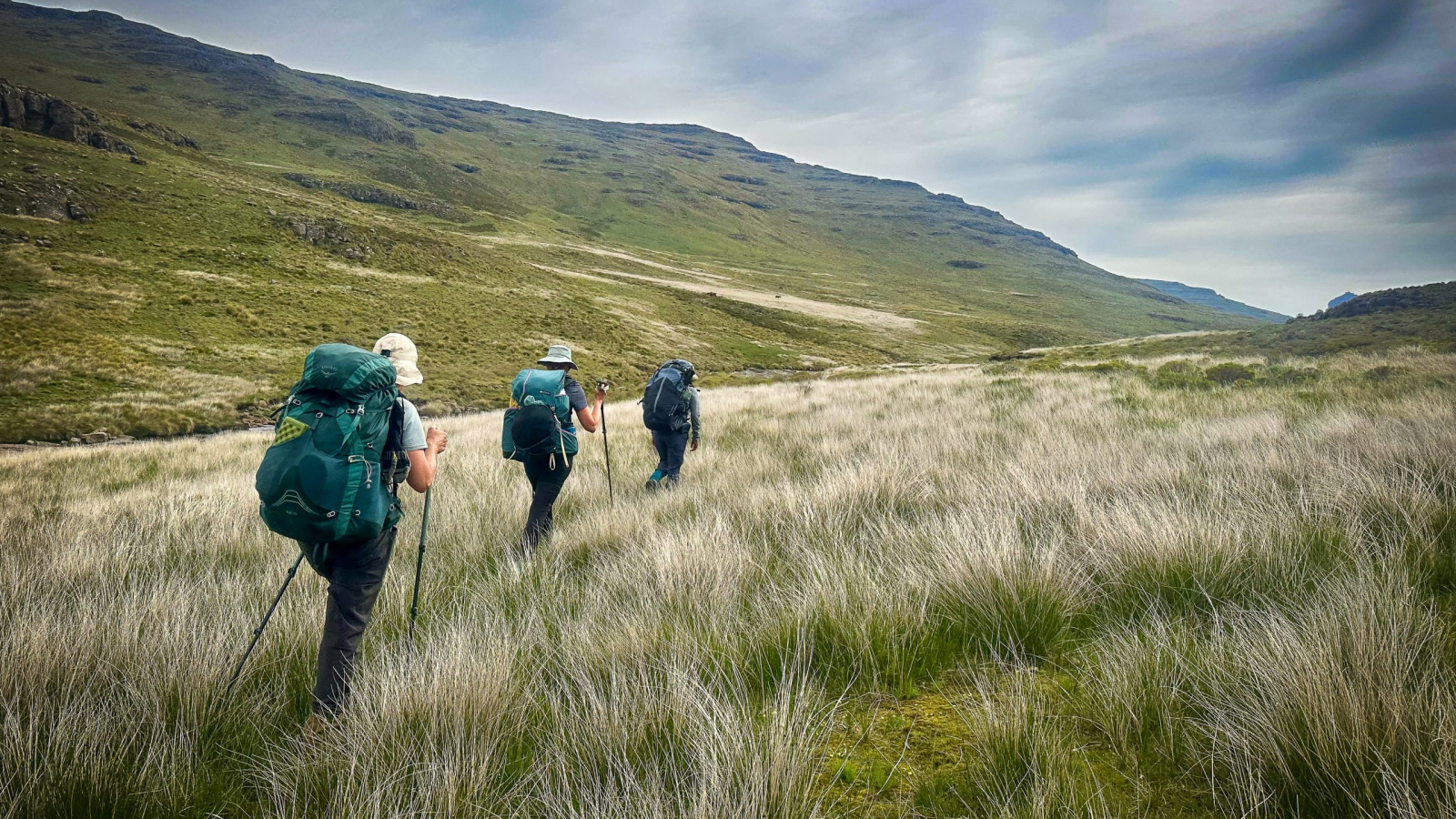
Day 1
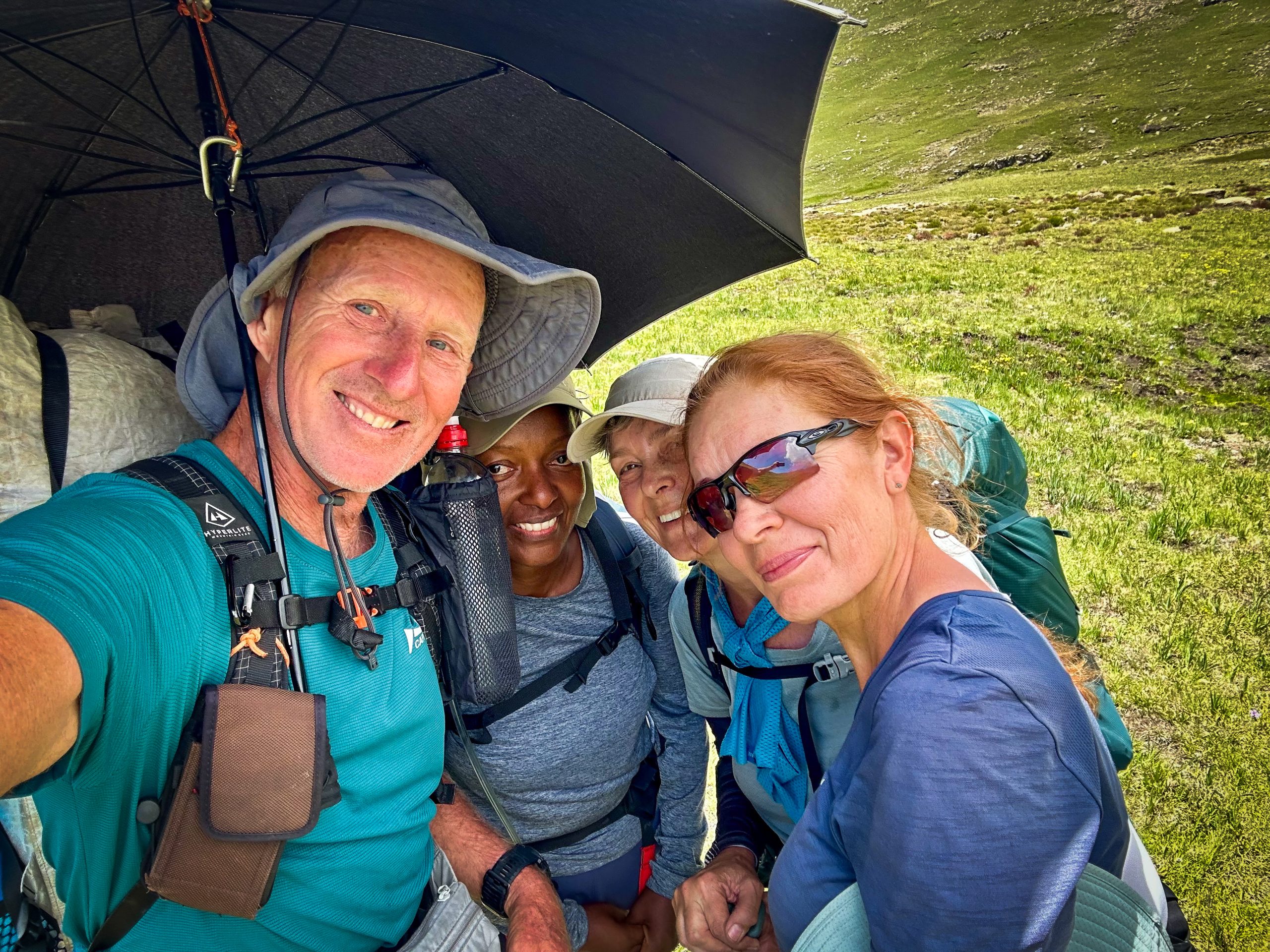
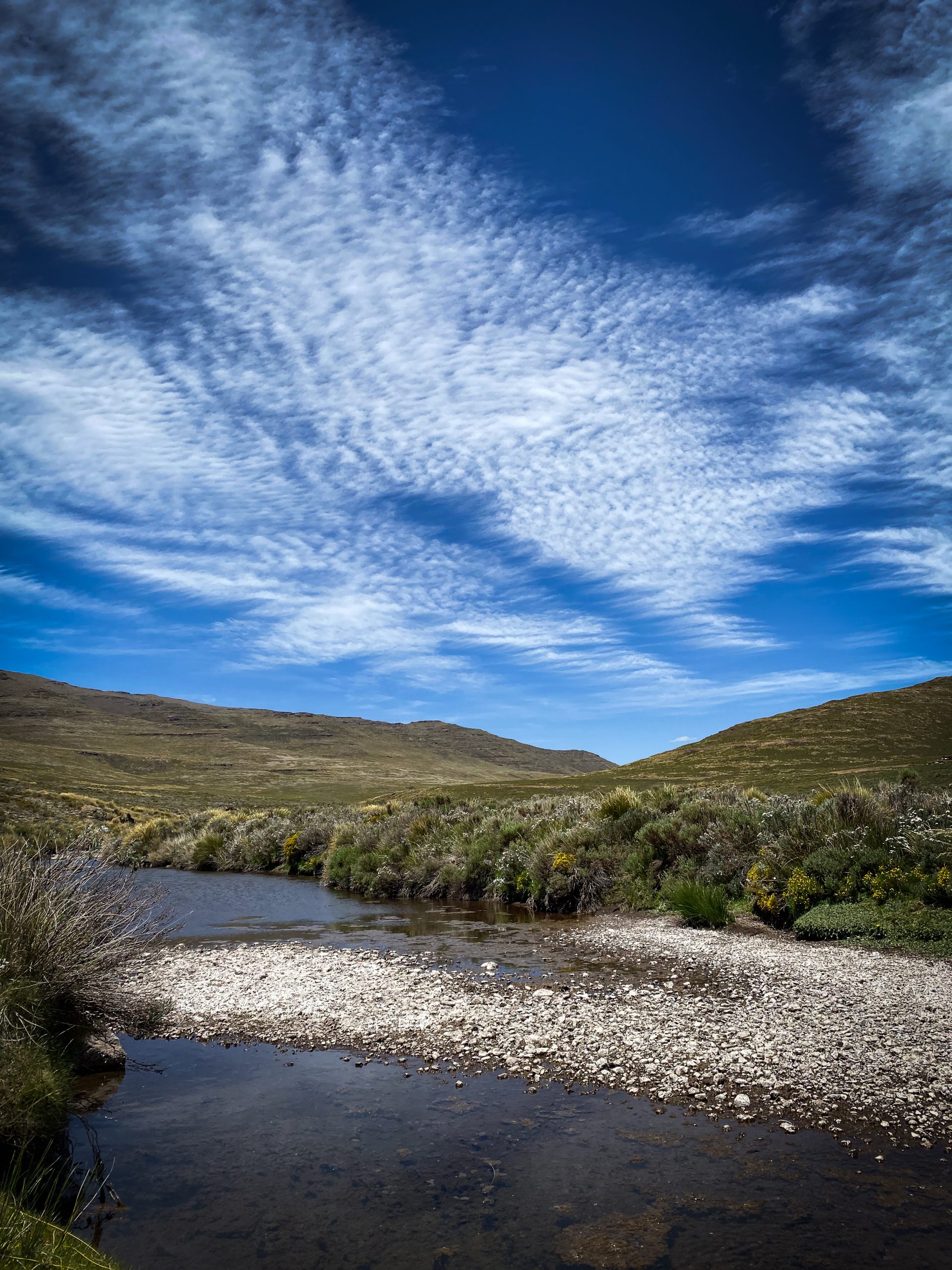
On the 6th of December 2024, four intrepid hikers (Brenda, Tshengi, Evadnee, and Bernard) set out to conquer the entire length of the Drakensberg Mountain range. Our goal was to complete the journey in 12 days with a resupply halfway. In the history of the Grand Traverse, I doubt one could have asked for better weather, as we had perfect sunshine days and exquisite clear views, with the exception of one afternoon of rain. Our goal was to tag the 6 FKT peaks along the way and complete a Grand Traverse in the stricter sense. Each day was a marvel to the senses.
The fields were filled with wildflowers, newborn lambs, jovial herdsmen, and the bluest skies. I’m incredibly proud of these two ladies, and what epic journey would be complete without the sibling I never asked for, St Bernard?
Distance 23km Elevations gain 1400m
Day 2
Most Grand Traverses cut across the interior from Mont-aux-sources to Mweni, but I decided to do a Northern/ full Grand Traverse hybrid and follow the escarpment to allow the group to experience the best of both routes. Despite a full first day, the group was eager to wake up early to witness sunrise at the top of Madonna Pass. The rest of the day was just spectacular, with views of Mbuduni Abbey, Pins and the Mweni area. I’d been hoping the good weather would hold so we could enjoy this section of the traverse and so far, my luck was holding.
Distance 18km Elevations gain 800m
Day 3
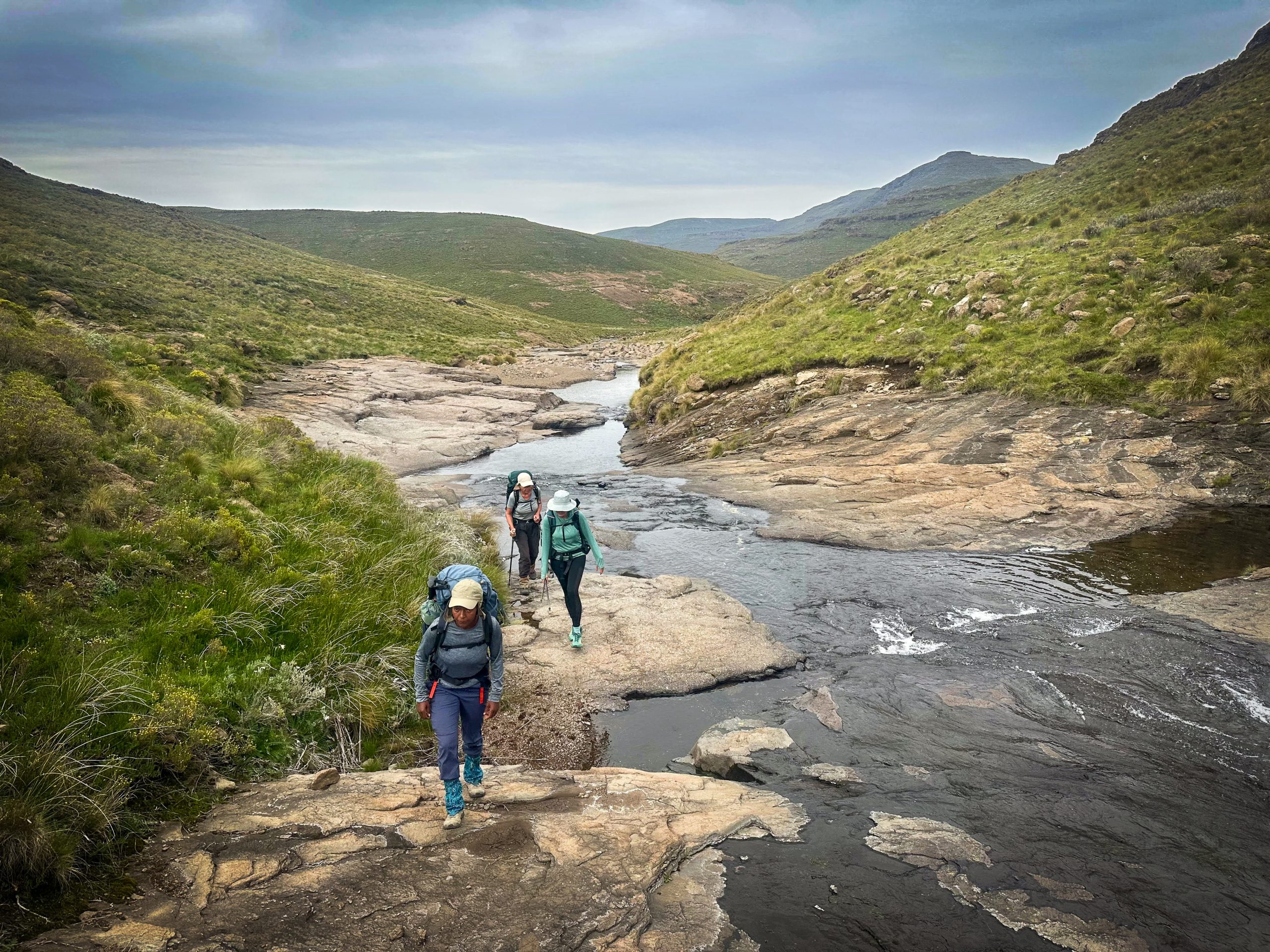
One thing I didn’t expect on this traverse is how hot it would be. Unseasonably clear skies led to blisteringly hot days with extreme UV. We took every opportunity to swim if we could find water deep enough, which during this drought period was also challenging. Day 2 was really tough, as our feet started to bear the load of carrying a traverse worth of food and equipment. Out campsite just above Nguze Pass was blissfully close to the river and deep enough that we could bath properly. Day 3 started with a steep climb up the Mlamhonjwa Buttress and continued to follow the Northern Traverse route south. We experienced clear blue skies and breathtaking views, as the Cathedral peak area drew closer.
Distance 17km Elevations gain 900m
Day 4
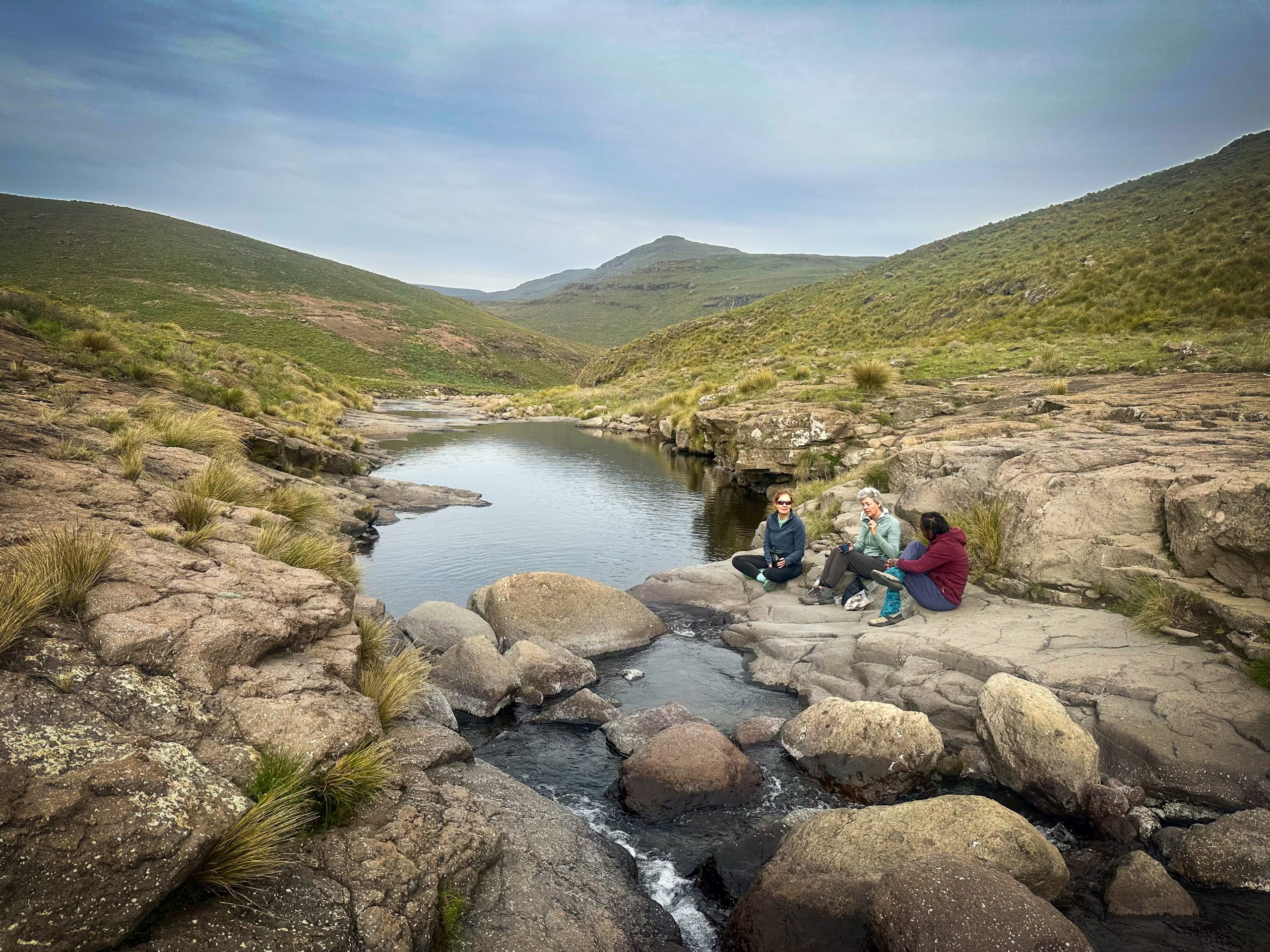
As Mweni faded from view, we summited our second peak of the Drakensberg Grand Traverse, Cleft Peak. The last time I summited this peak, it was so misty I didn’t realise we were on top until we saw the cairn. We followed the lower route around Didima Dome via Thuthumi pass, which was spectacular, and eventually made camp in the Yoddlers cascades valley. Everyone was by this point feeling rather foot sore, and a cold soak that evening in the river definitely helped to alleviate some of the suffering.
Distance: 18km Elevation gain: 1020m
Day 5
After spending the night at Yodlers Cascades, we started bright and early for the climb up to U-bend. From there, we had a decent 10km stretch along the ridge where we walked on a path and didn’t have too much elevation change. It felt good to stretch our legs and cover some distance effortlessly. Peak number 3, Champagne Castle, was on the itinerary, and as we made our way up to the summit, we were joined by a herder and his dogs. Tsengi translated his story for us, the gist of which was that he lived alone and wanted us to procure him a wife. It was a huge blessing to have T with us to be able to communicate in Sotho, and she was able to answer all of his questions about our journey. We headed down to Leslie’s valley in the afternoon with ominous rain clouds gathering, and managed to set up our tents before the first drops fell.
Day 6
Day 6 was our longest day in terms of distance and elevation. The climb from Leslie’s valley to Mafadi is far gentler from the northern approach than the southern, and before we knew it, we had summited peak number 4, Mafadi, which is also the highest peak of South Africa. I’ve summited this peak more times than I can remember, and the rock cairn marking the peak is now like returning to an old familiar friend. Popple Peak and Senquebethu Peak still had to be climbed before we made our way down to the top of Langalibalele Pass, which was the point of our resupply. Everyone was excited to unwrap the treats and additional food we had packed into our resupply, but we were less excited to be back to maximum pack weight again. After a quick catch up, the porters headed down and we set up camp to enjoy the fruits of our labours.
Distance: 22km Elevation gain: 1170m
Day 7
We were now officially halfway through the grand traverse! It’s a point where one is not close enough to the end to get your second wind, and systemic fatigue starts to set in. At this stage of the traverse, the landscape changes. Moving south away from the dramatic peaks of the north, the landscape became more open and pastoral, and we began to encounter many more of the traditional Basotho homesteads. It was magical to hike amongst the new lambs and the sounds of the goats’ bells. Dogs barked their warning as we passed, and curious eyes followed our journey. With our now full backpacks, we crawled up Mt Dunford and battled to summit our fifth peak, Giants Castle. We gratefully arrived at our camp just below The Tent and were able to bathe and do a bit of laundry. As one cannot use any kind of soap or laundry detergent in the wilderness, it’s more akin to redistributing the dirt and odours, but gives one the satisfaction that you tried.
Distance: 16km Elevation gain: 1096m
Day 8
The terrain on Day 8 still had plenty of big climbs, but interspersed were long stretches of pastoral land. One of our team members had a nasty fall and mildly sprained her hand, but we counted ourselves lucky that this was the first time anyone in the group had sustained any kind of injury. Water became scarcer and was often badly polluted with a thick brown algae, which I had never encountered before. We refrained from drinking this water and held out for better opportunities. Our interactions with the Basotho herdsmen were now constant, and we exchanged cigarettes for enormous smiles. When we set up camp a few kilometres from Thabana Ntlenyana, we had seven herders mesmerised by our gear and tents. They eagerly watched us set up camp and asked plenty of questions about how we survived with such thin clothing and meagre food supplies. A new addition to the Lesotho landscape was the frequency of portable wind-up radios, a valuable lifeline between the herders and the outside world. I’m sure someone had imported them en masse, and they were now cheaply available to the rural community. Everyone was very excited to be summiting the highest peak of Southern Africa the next day and possibly stopping at Sani Pass backpackers for a pizza.
Distance: 19km Elevation gain: 900m
Day 9
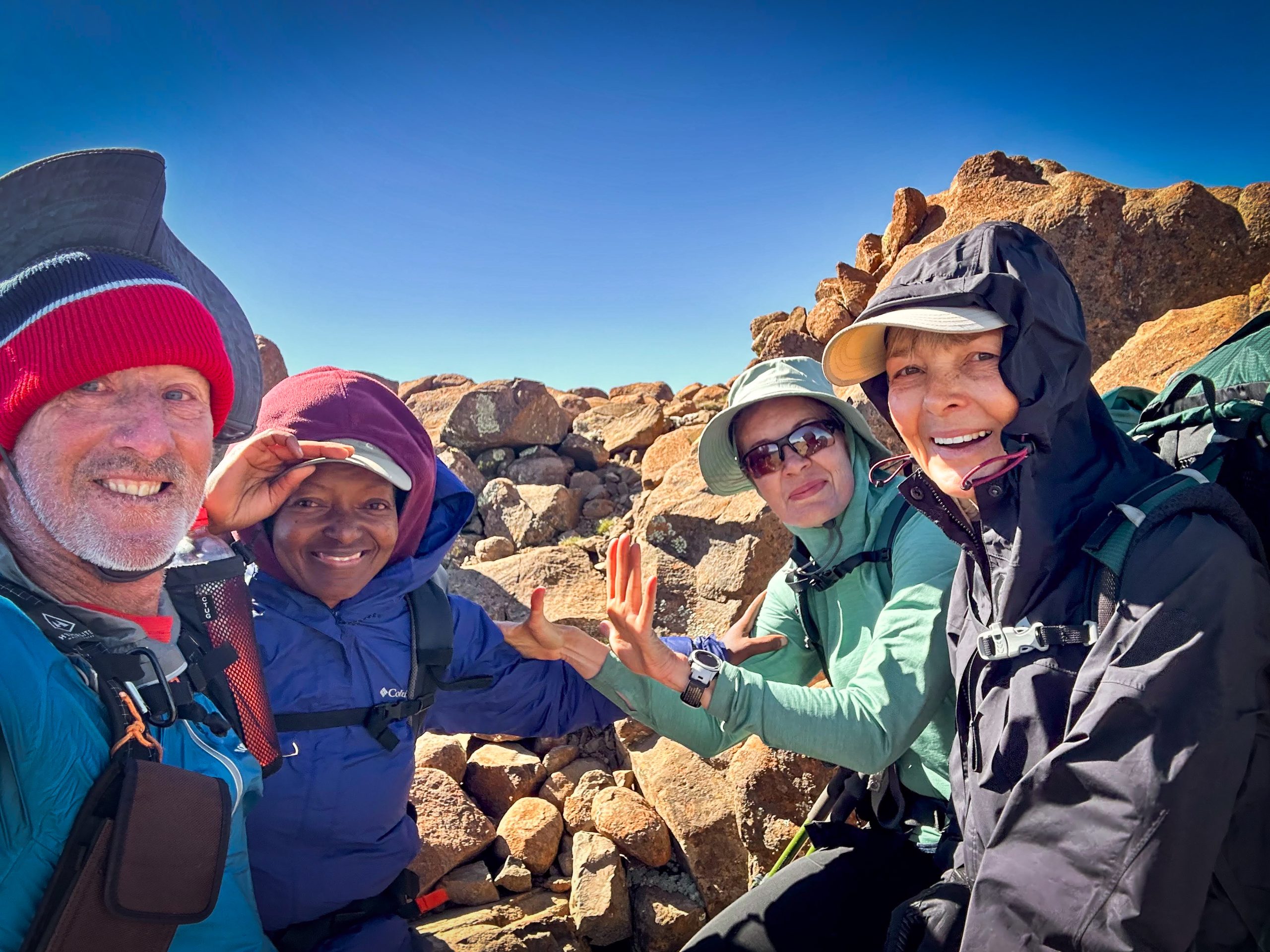
Rain had been forecast, so we made an early start, hoping not to have to summit Thabana Ntlenyana in rain and howling wind. Fortunately, there was no sign of rain as we neared the peak, but winds of about 70km per hour made hiking slow, and we were occasionally blown over. It was too dangerous for a summit selfie, so we had to make do sheltering against some rocks. The water quality continued to be poor, and when we set up camp for the night at Sani Flats, we had to boil water to make it potable. We collectively decided not to stop at Sani backpackers as the majority felt it would break our rhythm and make the traverse feel less authentic. With just 2.5 days remaining, it finally started feeling like the home stretch.
Distance: 21km Elevation gain: 900m
Day 10
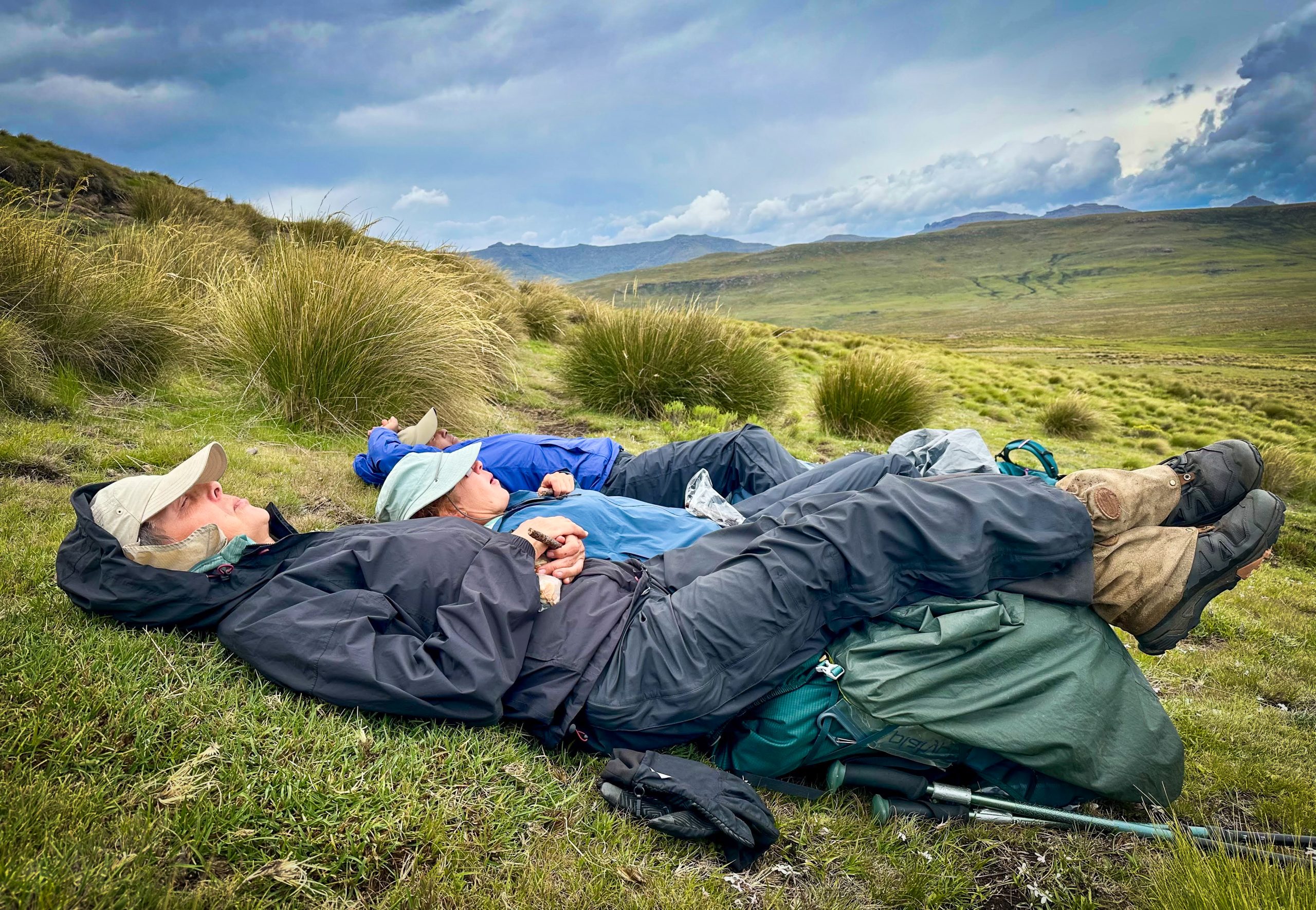
Just as I was starting to think we had carried rain gear across an entire mountain range for nothing, the rain finally came. Two intense downpours with hail had us sheltering for cover and waiting for the storm to pass. We set up camp close to the Rhino and experienced a downpour that lasted 2 hours. It felt wonderfully cosy to be snug in a sleeping bag while the rain pelted down. The mountains were misty and mysterious and looked more like the landscape I was familiar with in summer months.
Distance: 17km Elevation gain: 722m
Day 11
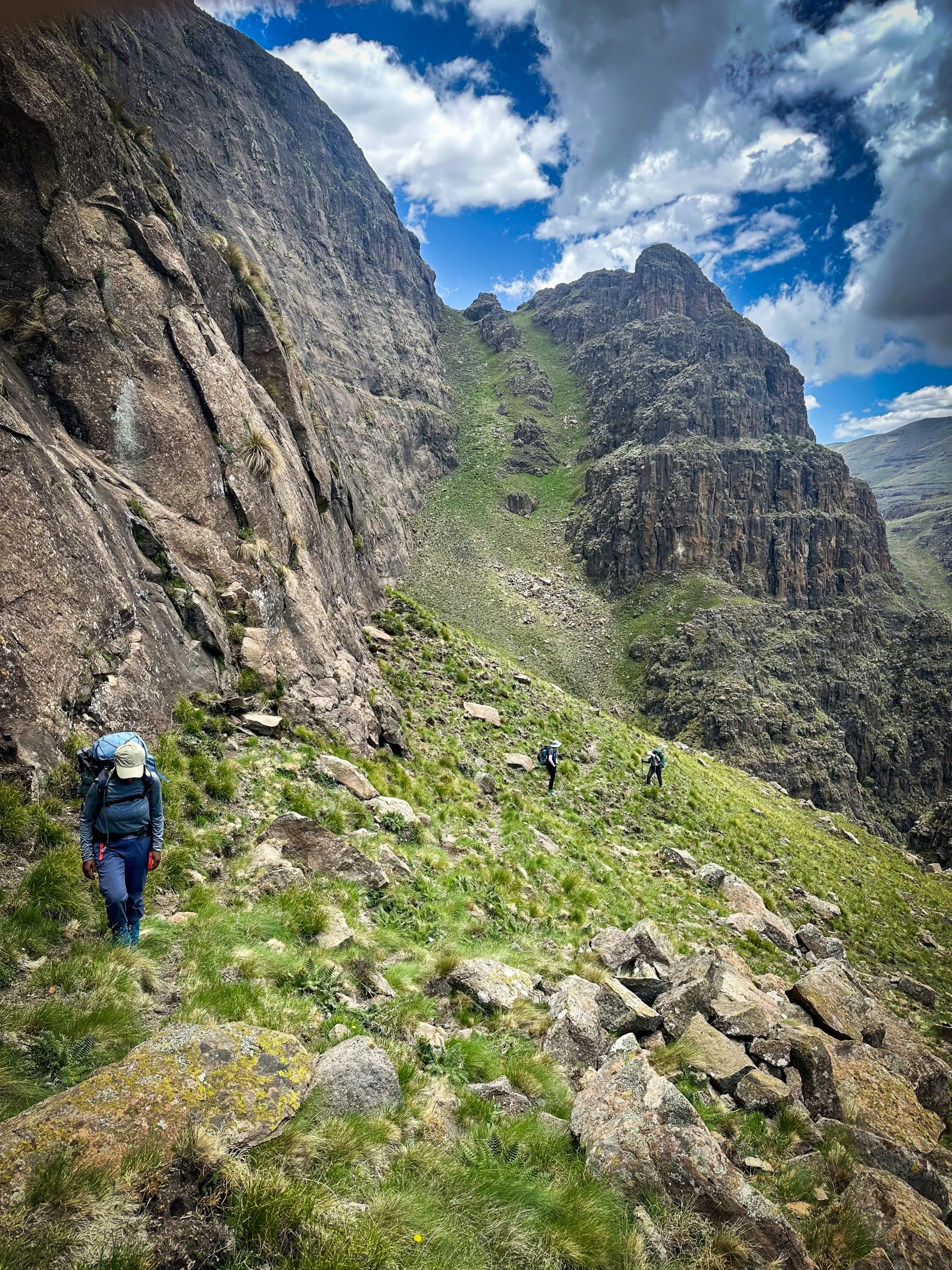
This was the last full day of the Grand Traverse and it was a joyous moment when we reached the top of Ngwangwane and there were officially no more hills to climb! From here you have to descend a short gully, which is arguably the only really ‘technical’ section of the traverse and make your way down to Thamathu valley. The views of Garden Castle were absolutely spectacular as one was able to see the Giants Castle trail winding far below in the valley. Our final campsite was voted a 10/10. Huge pools for an afternoon swim and plenty of flat ground for a final game of Rummicup. Feeling were mixed as hikers were sad to be ending the journey, but simultaneously looking forward to returning home to loved ones. Distance:
17km Elevation gain: 722m
Final Day- Day 12
Thamathu Pass is arguably the easiest pass in the Drakensberg. A gentle path that meanders down to the Bushman’s Nek border post guides us to the finish line. Being one of only two pedestrian borders in Southern Africa, we casually amble through the no man’s land between two countries, and the reality that our journey has ended dawns on us. After almost two weeks of leading a nomadic simple life, re-entry into society is a shock to the senses. What stands out most on this traverse was the harmony and camaraderie that our small group attained. A blend of various ages, genders and cultures has merged seamlessly into an unforgettable experience. Despite its challenges, the 12 day hike has formed an unbreakable bond of shared adversity and inside jokes. I’m delighted that everyone in the group completed the challenge and deeply honoured to be able to turn the dreams of the participants into reality. Our journey back to Witsieshoek was a culinary tour of the Drakensberg as we stopped regularly to delight in beverages and meals one normally takes for granted. I can’t help but wonder what adventures my next Grand Traverse will hold 






Add a Comment